How solar works
How a home solar system actually works
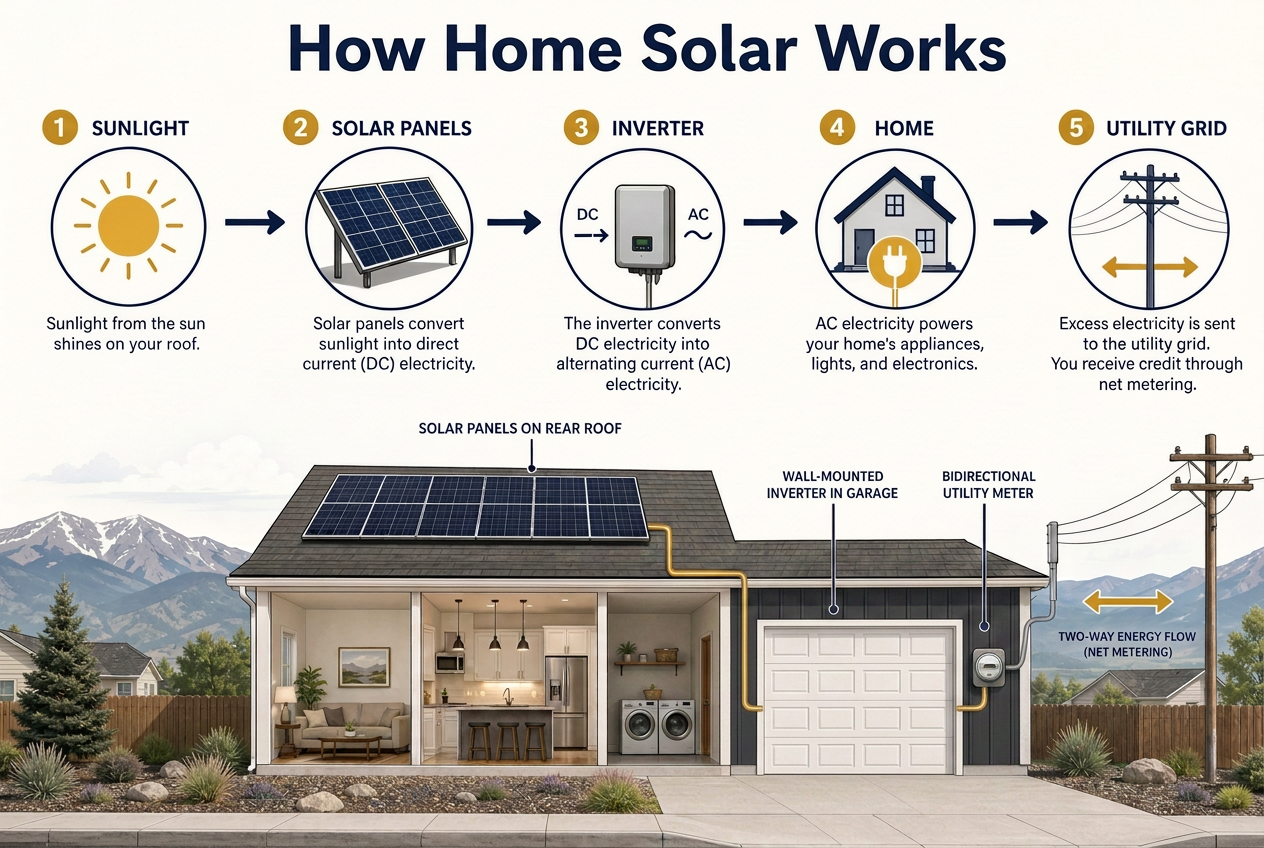
A residential solar system is simpler than it looks. Five components do the work; the rest is paperwork and planning.

1. Solar panels
Panels sit on your roof and convert sunlight into DC (direct current) electricity. Panel wattage and layout are chosen based on how much sun each roof face receives across the year.
2. Inverter
An inverter converts DC electricity from the panels into AC (alternating current) electricity your home can use. Some systems use a single string inverter; others use microinverters or power optimizers on each panel.
3. Your home's electrical panel
Solar power is delivered into your existing electrical panel. Your appliances use it first. Anything you do not use flows out to the grid.
4. Utility meter
A bidirectional meter tracks electricity flowing in both directions. When your system produces more than you use, the excess flows to the grid and — depending on your utility — earns credit on your bill.
5. Battery (optional)
A home battery stores excess solar production for use later, and in most configurations provides limited backup during a grid outage. Batteries do not power an entire home indefinitely. See our batteries page for detail.
What solar does not do
- It does not eliminate your utility bill entirely (fixed service charges remain).
- It does not automatically provide backup power during an outage without a battery.
- It does not raise every home's resale value the same amount.
See how a system would work on your specific home
Last reviewed July 2026. This page provides general educational information and is not a proposal, quote, or offer of service.