Batteries
What a home battery actually does
Batteries are useful, but they are often oversold. Here is a grounded view of what a residential battery does — and what it does not.
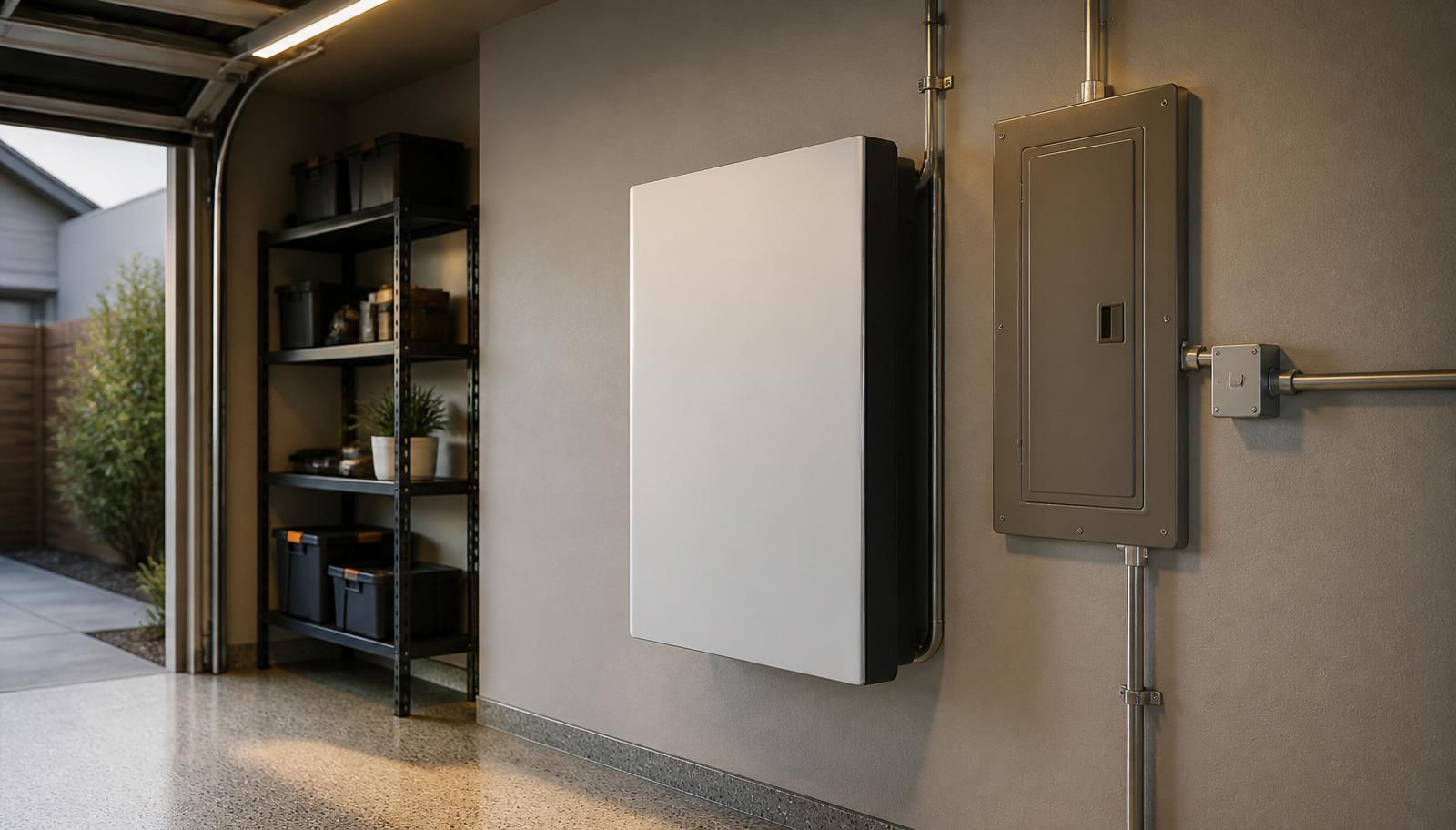
Day-to-day: shifting your own power
A battery stores solar production during the day and releases it later — either to power evening appliances or to avoid buying expensive grid electricity during peak-rate hours on time-of-use plans. The financial value of this shifting is entirely dependent on the spread between your utility's peak-hour and off-peak rates, and on how your utility values exported solar vs. self-consumed solar.
Grid outages: partial backup, not whole-home
Most residential batteries are sized to back up a subset of loads — a "critical loads panel" wired to fridge, lights, internet, garage door, and a few essential outlets — for several hours to a day. They generally cannot run central air conditioning, an electric dryer, and an EV charger simultaneously. Whole-home backup is possible but usually requires multiple batteries, a load management device, and higher-capacity electrical work.
Common battery sizes and chemistry
Residential batteries commonly range from 5 kWh to 20 kWh of usable capacity per unit. A single battery typically covers essential circuits overnight; larger banks cover more. Most home batteries sold today use lithium iron phosphate (LFP) chemistry, which is well suited to daily cycling, tolerant of a wide temperature range, and does not have the thermal-runaway risk profile of earlier NMC-chemistry systems.
Warranty and lifespan
Most residential batteries carry a 10-year warranty and are rated for a specific number of cycles or total throughput (often 30–70 MWh over the warranty term). Expect the usable capacity to be around 70% of the original rating at end of warranty. Warranty coverage varies significantly on questions like: who handles replacement labor, whether the battery is covered for standby losses in cold garages, and how the warranty transfers if you sell the home.
When a battery makes financial sense
- Your utility uses time-of-use rates with a wide peak/off-peak spread.
- Your net-metering export credit is worth meaningfully less than your retail rate.
- You place a high value on outage resilience — medical equipment, remote work, well pumps.
- You live in a rural area with more frequent or longer outages than the Denver metro average.
When none of these apply, a battery may not pay back financially — even though it still offers resilience benefits. Batteries are often sold as an emotional purchase; that is fine, but the customer should know that is what is happening.
Colorado-specific notes
Xcel Energy currently offers a battery incentive program for eligible Colorado customers who allow the utility to dispatch stored energy during peak events. Terms change from year to year and are not available in all service areas. Your installer should be able to walk you through current program availability at the time of your proposal.
Is a battery right for your home?
Last reviewed July 2026. This page provides general educational information and is not a proposal, quote, or offer of service.