EV owners
Solar + electric vehicles
Adding an EV to your household commonly increases annual electric usage by 2,500–4,500 kWh. Sizing solar for that matters — a system sized for pre-EV usage is undersized on day one.
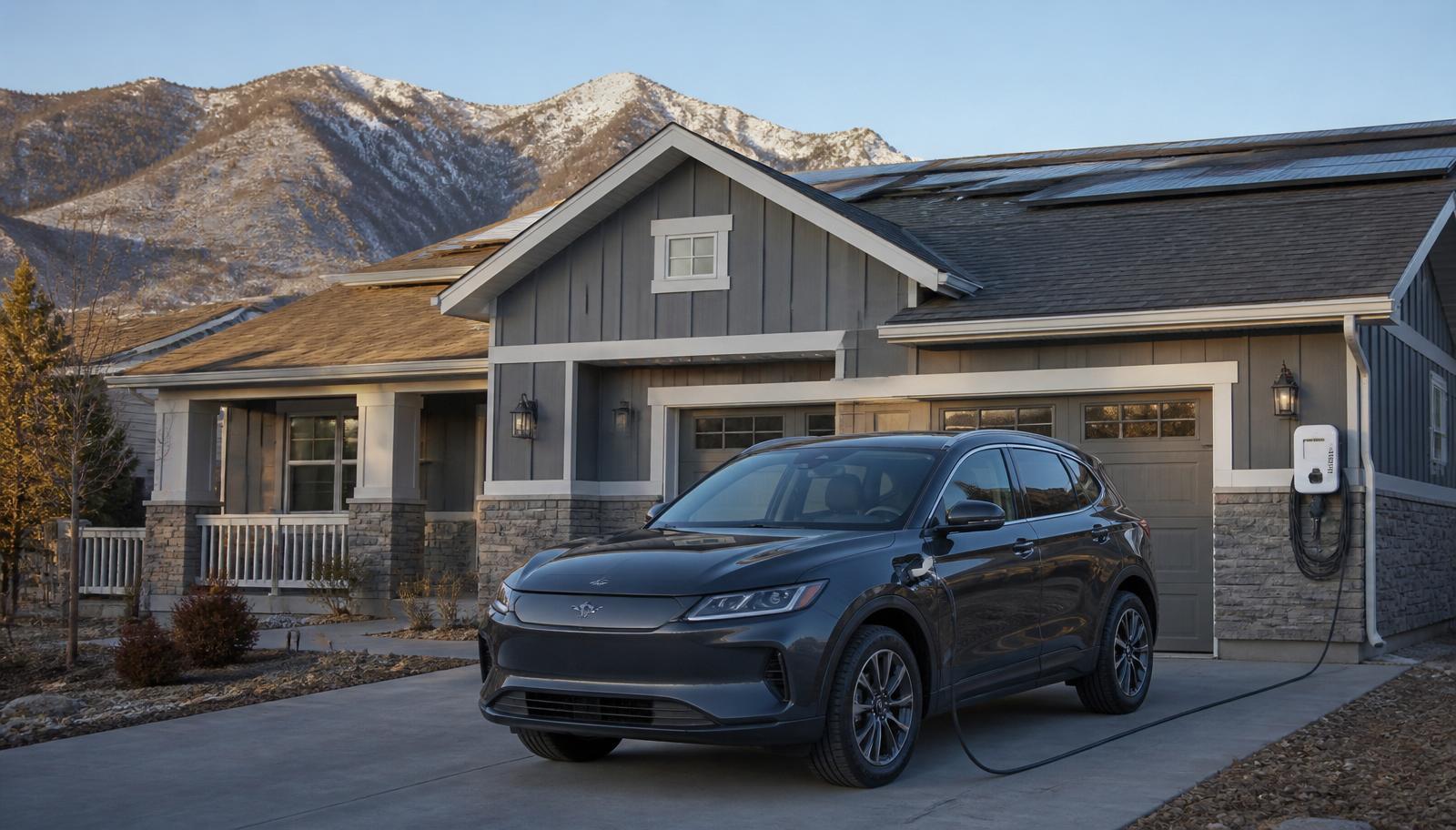
How much extra electricity does an EV add?
A typical EV consumes about 25–35 kWh per 100 miles, depending on vehicle efficiency, driving style, and Colorado's temperature swings (cold weather reduces range and increases battery-conditioning draw). A household that drives 10,000–12,000 miles per year adds roughly 2,500–4,500 kWh of annual electric use — often the equivalent of a small second household on the same meter.
Sizing solar for an EV
When solar is sized around historical usage from before the EV, the system is too small on day one. If you plan to buy an EV during the useful life of the system (25+ years), factor that in during design. It is usually cheaper to install slightly larger up front than to add capacity later as a separate project — separate permitting, separate crew mobilization, separate interconnection revision.
Rate plans for EV owners
Many Colorado utilities offer time-of-use plans specifically for EV owners that reward off-peak overnight charging (typically 9 p.m. to 5 a.m.). Xcel Energy's residential EV plan and CORE Electric Cooperative's TOU rate are two examples. Combined with a correctly sized solar array (and sometimes a battery), an EV can be significantly cheaper to charge at home than to fuel an equivalent gasoline car — sometimes 3–5x cheaper per mile.
Charging strategy: daytime vs. overnight
There is a common misconception that EV owners should always charge from solar during the day. In reality, whether daytime or overnight charging is better depends on your rate plan:
- Flat rate + full net metering: charge overnight; export solar during the day for credits.
- TOU with cheap overnight rates: charge overnight; solar offsets other daytime loads.
- TOU with poor export credits: charge during the day to self-consume as much solar as possible.
Electrical panel considerations
An EV charger (Level 2, 240V, 40–48A) is a significant electrical load. Combined with solar interconnection, some homes need a panel upgrade from 100A or 150A to 200A — a common $2,000–$5,000 addition. Have this evaluated early in the design process; discovering it after signing a solar contract is a frequent source of change orders and delays.
Plan a system that accounts for your EV
Last reviewed July 2026. This page provides general educational information and is not a proposal, quote, or offer of service.