Financing
Four ways to pay for solar
Cash, loan, lease, or power purchase agreement. Each has trade-offs; none is universally best. The right one depends on your tax situation, cash on hand, and how long you plan to stay in the home.
Cash
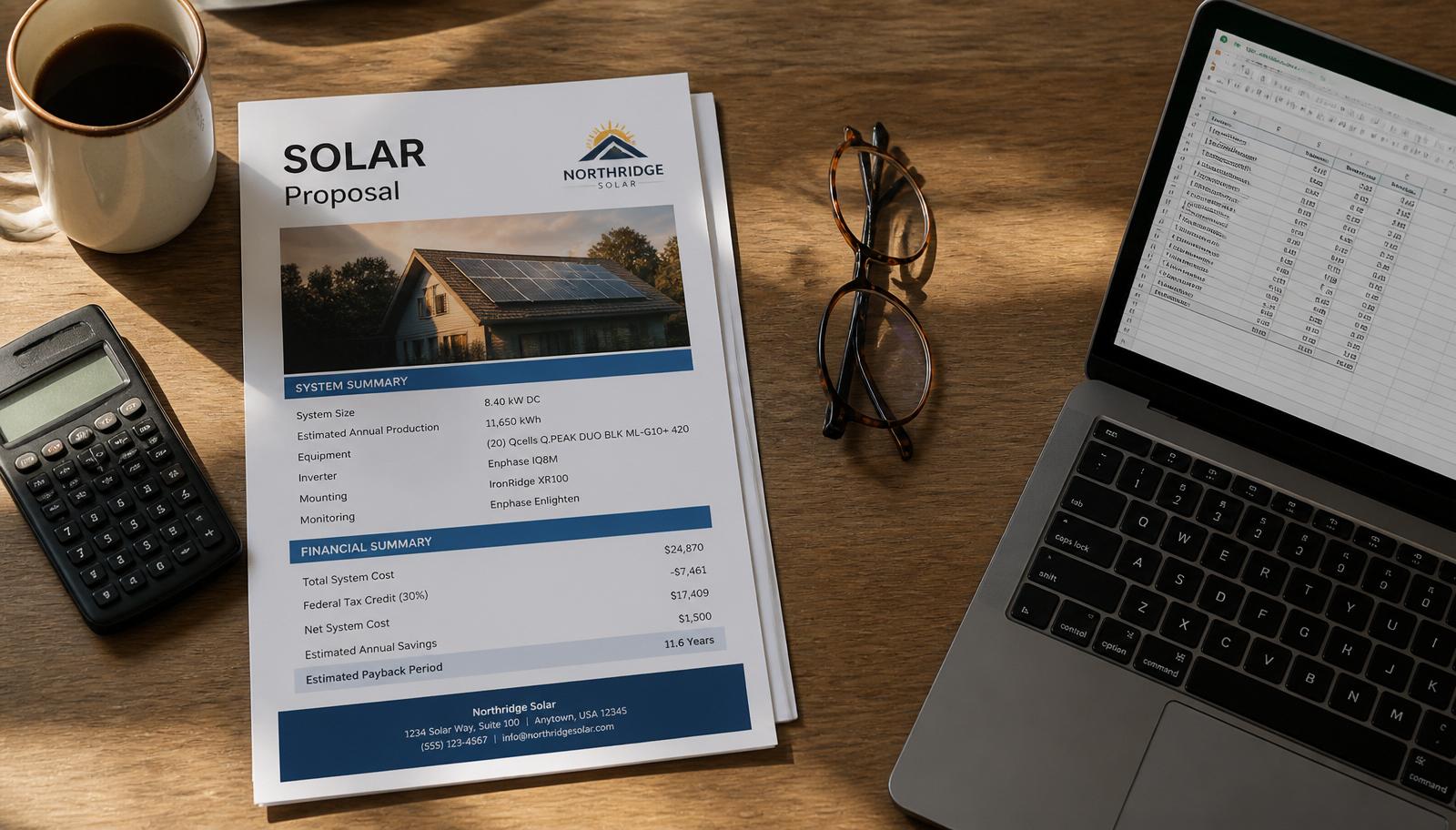
Paying cash produces the strongest lifetime economics because there are no financing charges. You own the system outright, capture any applicable tax incentives directly, and pay nothing monthly. The trade-off is the up-front capital — typically $18,000–$35,000 for a Colorado residential system before incentives, depending on size, equipment, and roof complexity. If you have the cash and a stable electric-usage profile, this is usually the cleanest option.
Solar loan
A solar loan lets you own the system without paying cash. Loan terms typically run 10–25 years. You capture applicable tax incentives directly (unlike a lease). Two variables matter more than the monthly payment quoted to you:
- APR: the true cost of the money over the term. Ask for it explicitly; a low monthly payment can hide a high APR.
- Dealer fee: most solar lenders charge the installer a fee that is quietly rolled into the amount financed. On a $25,000 system, a 25% dealer fee means you are actually financing $31,250. Ask what the cash price is vs. the loan price — the difference is the dealer fee.
Lease
With a lease you do not own the panels; a third party does, and you pay a fixed monthly amount to use the electricity they produce. You do not claim tax incentives — the owner (usually the leasing company) does. Leases typically include an annual price escalator (1.9%–2.9% per year is common), which compounds over the 20–25 year term. A lease can make sense if you cannot use the federal tax credit (low tax liability, retirees on fixed income), but the lifetime cost is almost always higher than a comparable cash or loan structure.
Power purchase agreement (PPA)
Similar to a lease, but you pay per kilowatt-hour produced rather than a fixed monthly amount. Same ownership structure and same escalator concept apply. Whether a lease or PPA is the better structure depends on whether your provider's per-kWh price plus escalator beats your utility's projected rate increases — an unknowable comparison, but one worth stress-testing with pessimistic assumptions.
Home resale with each structure
- Cash / owned system: generally adds value at sale; buyer inherits a paid-off asset.
- Loan: buyer must assume the loan or you must pay it off at closing. Straightforward but can complicate mortgage underwriting for the buyer.
- Lease / PPA: most complex. Buyer must qualify with the leasing company and assume the contract, or you buy out the remaining term (often more than the system's fair market value in later years).
Questions worth asking regardless of financing
- What is the APR, not just the monthly payment?
- Are there dealer fees or origination fees rolled into the amount financed? How much?
- What is the escalator on a lease or PPA (annual % increase)?
- What happens to the contract if you sell the home?
- How are warranty issues handled during the term? Who do I call?
- Is there a prepayment penalty on the loan?
Discuss which financing approach fits your situation
Last reviewed July 2026. This page provides general educational information and is not a proposal, quote, or offer of service.